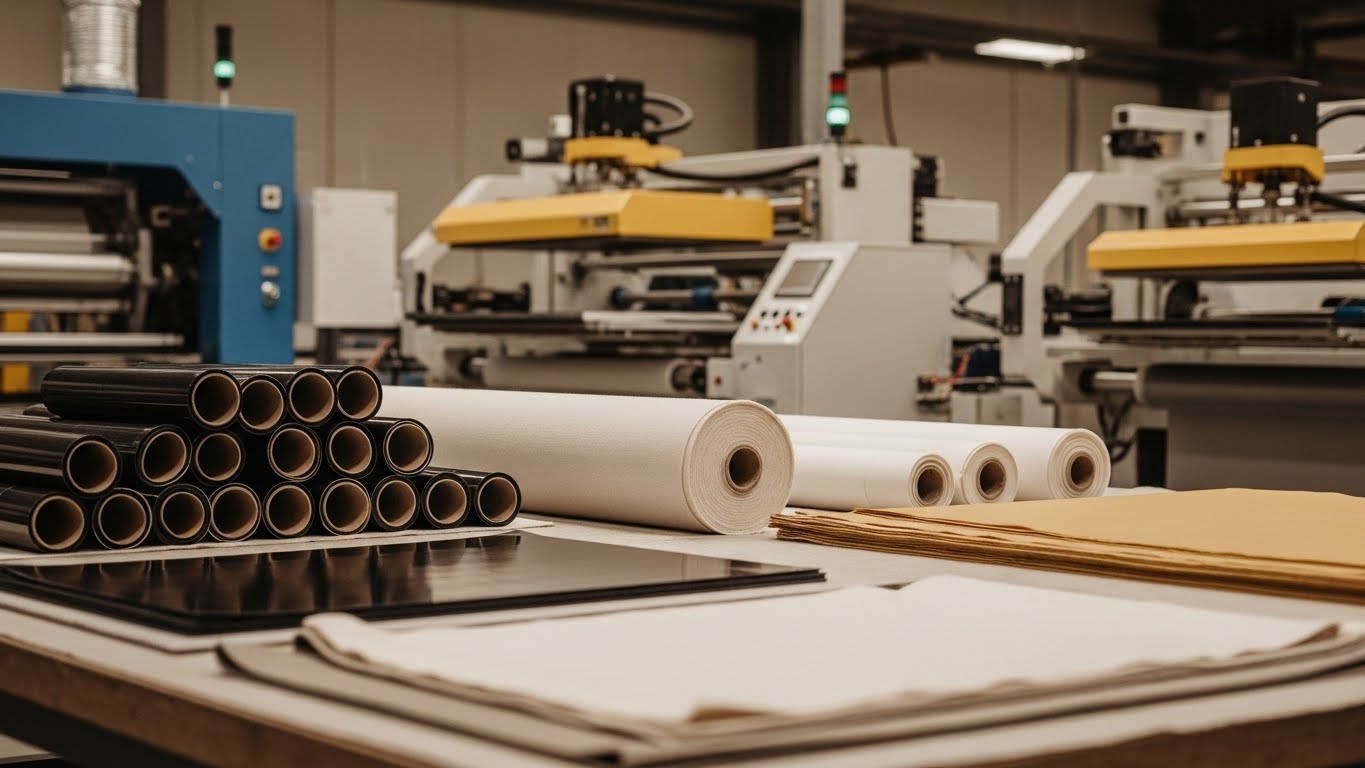
In an HF (high frequency) printed badge, the layer everyone sees is the TPU film. Whether production runs smoothly, however, often depends on a layer nobody sees: the PET carrier film. Also called the HF support carrier, it holds the TPU and adhesive layers in place during embossing and peels away cleanly once the job is done. This guide explains what the carrier does, what to check when choosing one, and which problems point to the wrong choice.
What does a PET carrier film do?
In HF embossing, the die shapes the TPU film using high-frequency energy and pressure. Throughout that step the material has to stay flat, taut and in position. The carrier takes care of this:
- Support: it keeps thin TPU and hot melt layers from shifting or wrinkling under the die.
- Transport: it lets the cut badge reach the garment line in shape, right up to the heat press.
- Release: it peels off after application without damaging the badge surface.
The carrier never ends up on the garment, yet it directly affects edge definition, surface quality and line speed.
What to check when choosing a carrier
If thickness is the only question asked when buying carrier film, important differences get missed. Look at these properties together:
- Heat stability: the film should not shrink, curl or lose dimension at embossing and pressing temperatures. The LTS HF support carrier page lists resistance above 200 °C; compare that with the highest temperature in your own process.
- Release behaviour: an easy peel surface lets the carrier come off without lifting badge edges or keeping adhesive behind. Whether it is peeled hot or cold should be confirmed on a sample together with the adhesive type.
- Surface finish: a matte or gloss carrier can influence the look of the TPU surface it touches, so choose carrier and TPU film together for the finish you want.
- Flatness and gauge consistency: film that varies in thickness along the roll makes it harder for die pressure to spread evenly.
- Static: static charge during cutting and stacking can make parts cling together and attract dust. Test this under your own line conditions.
Common signs of the wrong carrier
The following problems are usually blamed on the TPU or the die, but the carrier may be the cause:
- Waviness in the film or curling edges after embossing
- Fine details tearing or lifting during peeling
- Unexpected gloss or matte differences on the badge surface
- Adhesive residue left on the carrier
When you see these, running the same TPU and adhesive on a different carrier is a quick way to isolate the cause.
The carrier is one part of a material set that also includes TPU and hot melt film. Validating all three layers together on a sample reduces surprises in bulk production. For film options, see the Premium TPU film page.
Related solutions
This article was summarised and commented on by the LTS Frekans editorial team, drawing on the source article.